


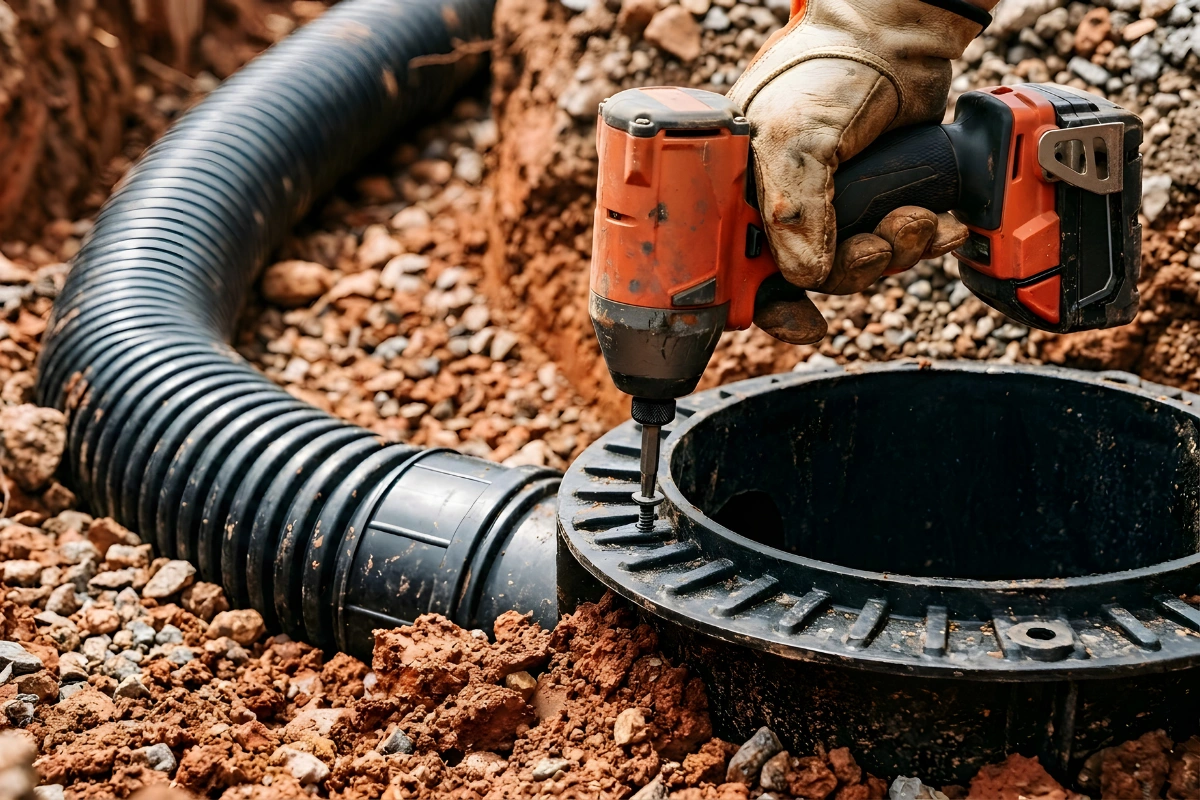
Catch basin installation helps control rainwater that repeatedly pools in yards, beside hardscapes, or at low points around a property. Contractors represented by Drainage Pro LA install catch basins that capture concentrated surface runoff and connect it to underground drainage piping.
Proper placement is critical. Basin elevation, surrounding grade, runoff volume, pipe slope, and discharge location must work together so water reaches the inlet and can drain away effectively.
Where Catch Basins Work Best
Catch basins are designed for concentrated surface runoff. They are typically placed where grading naturally directs rainwater toward a defined collection point.
Common problem areas:
- Low spots with recurring standing water
- Downspout runoff collecting near the home
- Patios and hardscapes holding rainwater
- Yards receiving runoff from sloped areas
Basin Placement & Drainage
A catch basin only performs well when water can reach it and leave it. Installation therefore focuses on two critical parts of the system: inlet placement and a properly routed drain line.
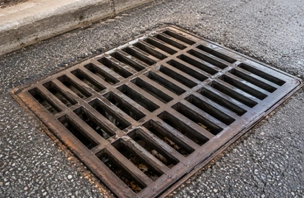
Inlet Placement
The grate is set at the collection point where surrounding grade directs surface runoff into the basin.
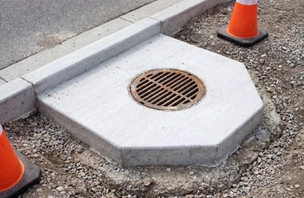
Drain Line Routing
Underground piping carries collected runoff from the basin toward a suitable discharge point for the property.
Catch Basin Installation
Installation is planned around existing grade, the source of runoff, and the available drainage route rather than simply placing a basin where water is already visible.
Locate the Low Point
Runoff patterns and grade are checked to identify the most effective collection area.
Set Basin & Pipe
The basin elevation and underground drain route are established for effective water movement.
Restore the Area
The disturbed area is finished around the installed basin while keeping the inlet accessible.
Catch Basin FAQs
A catch basin can address standing water when surface runoff collects at a defined low point and there is a suitable route for drainage piping. Saturated soil or broader grading problems may require additional drainage work.
Placement is based on grade and runoff direction. The basin should sit where surface water naturally converges and at an elevation that allows water to enter the grate.
Water enters the basin and travels through connected drainage piping to an appropriate discharge location. The available outlet depends on site conditions and applicable local requirements.
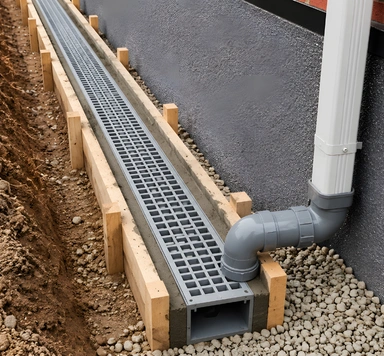
A catch basin captures concentrated surface runoff at a specific location. A French drain intercepts water through a longer gravel-and-pipe trench. Some properties benefit from using both within the same drainage plan.
Remove leaves and debris from the grate and periodically check the basin for accumulated sediment. Keeping the inlet clear helps maintain water flow during rainfall.